Introduction
Timeline
November 2025 - January 2026
My Role
UX Designer and Reseacher
Tools
Problem Space



Introducing ParkWise

Current Parking Information
Immediate Positive Feedback
The "Loppers"
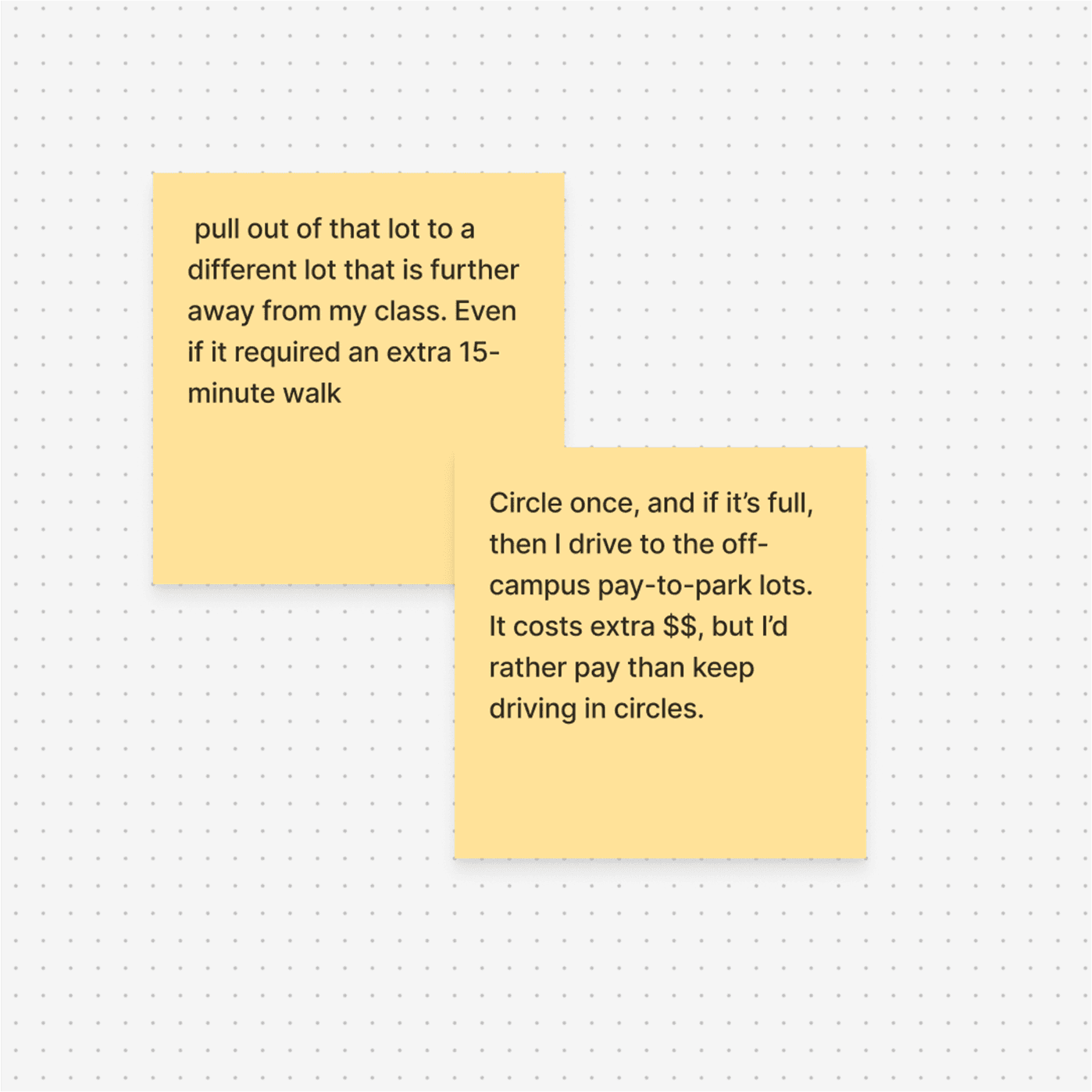
Take Risk/Social Reliance
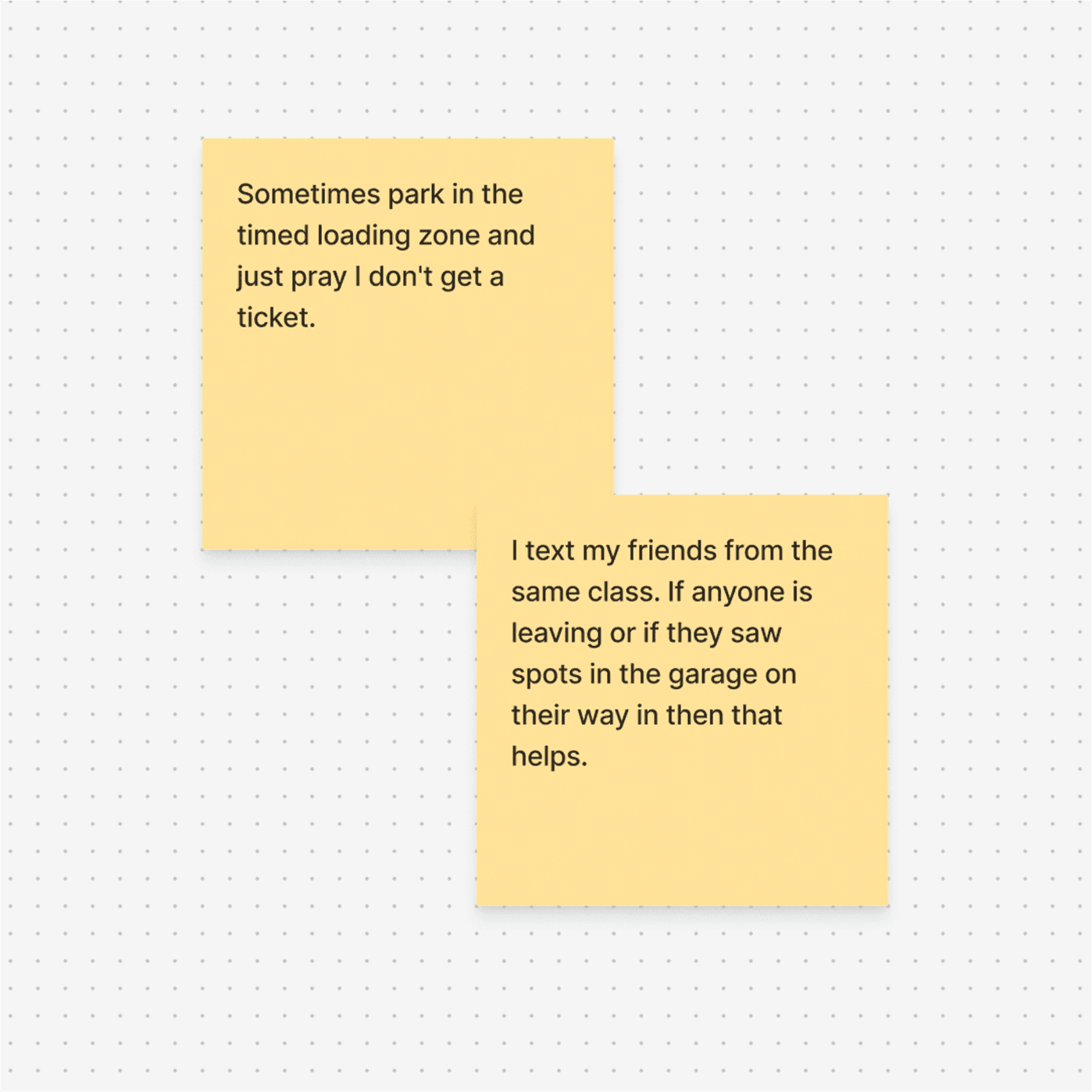
Social Network
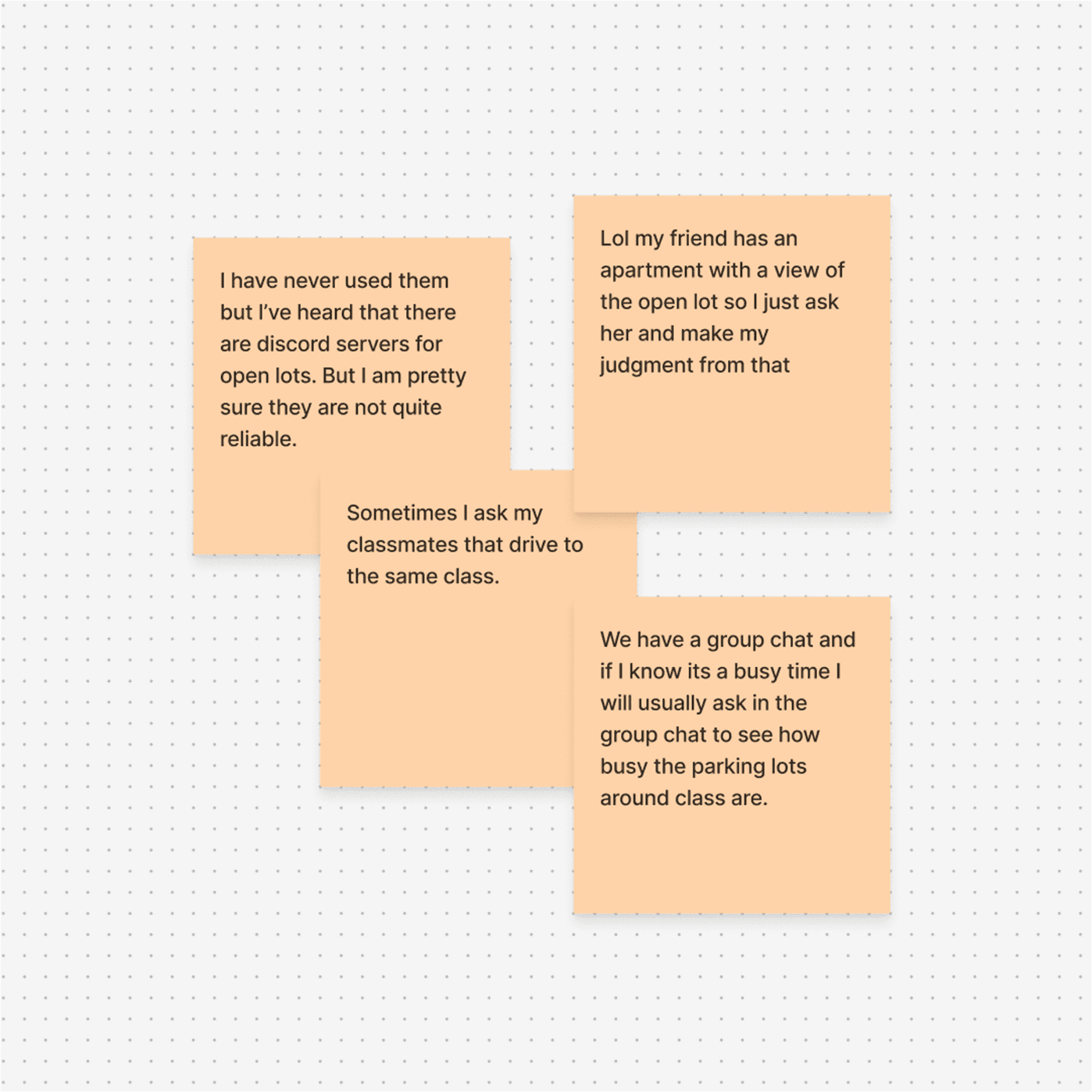
Tactical/Known Experience
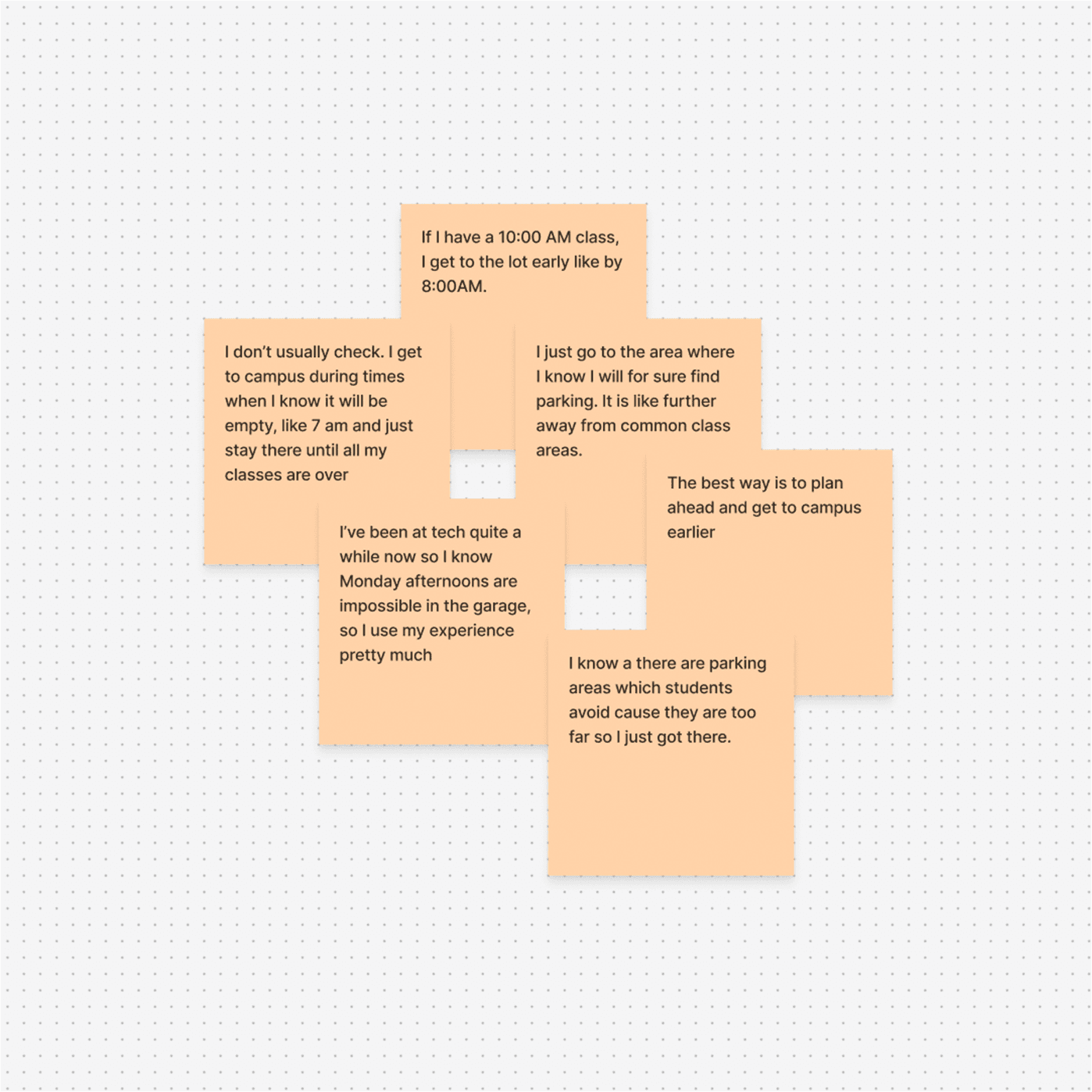
High Academic Impact
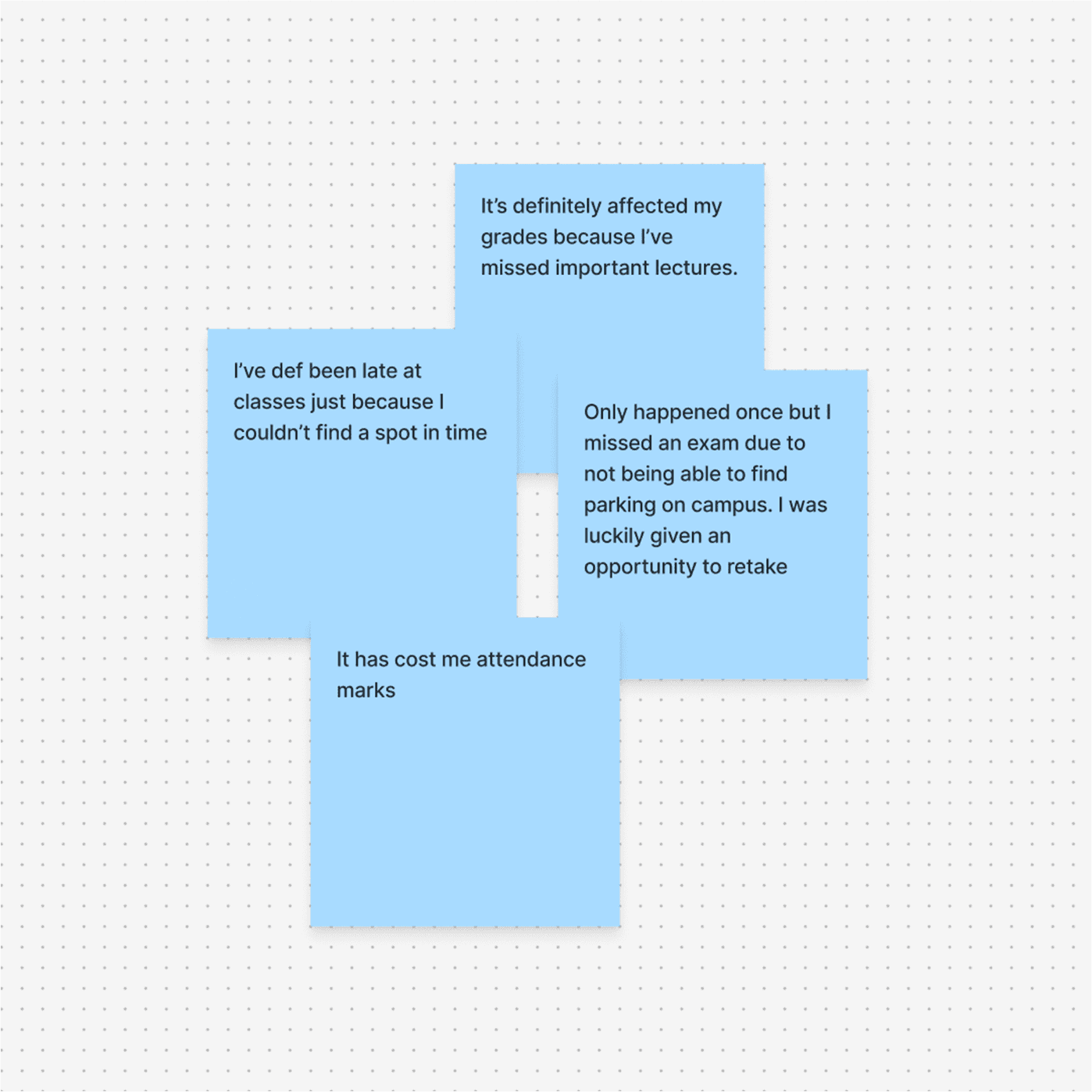
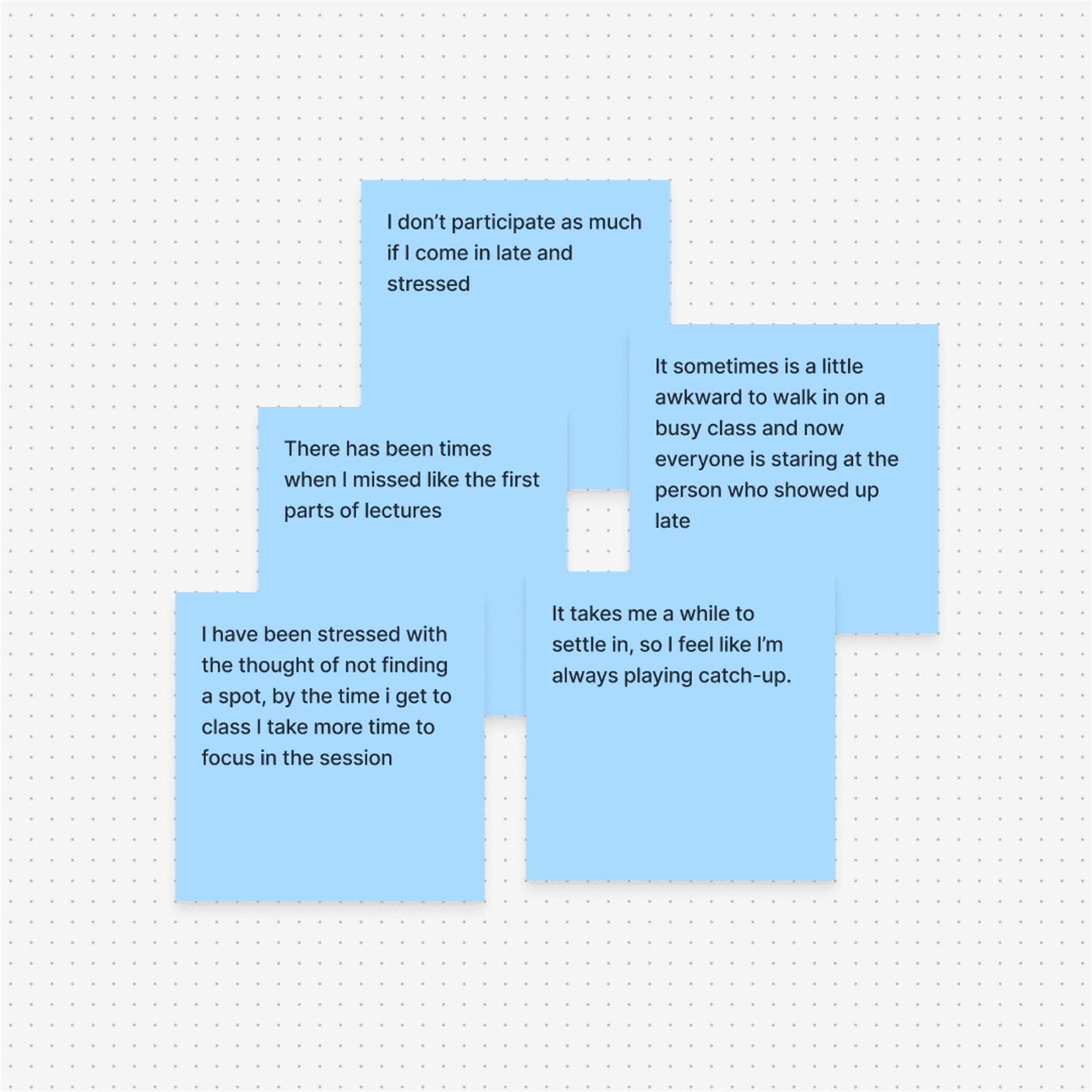
Behavioral Impact
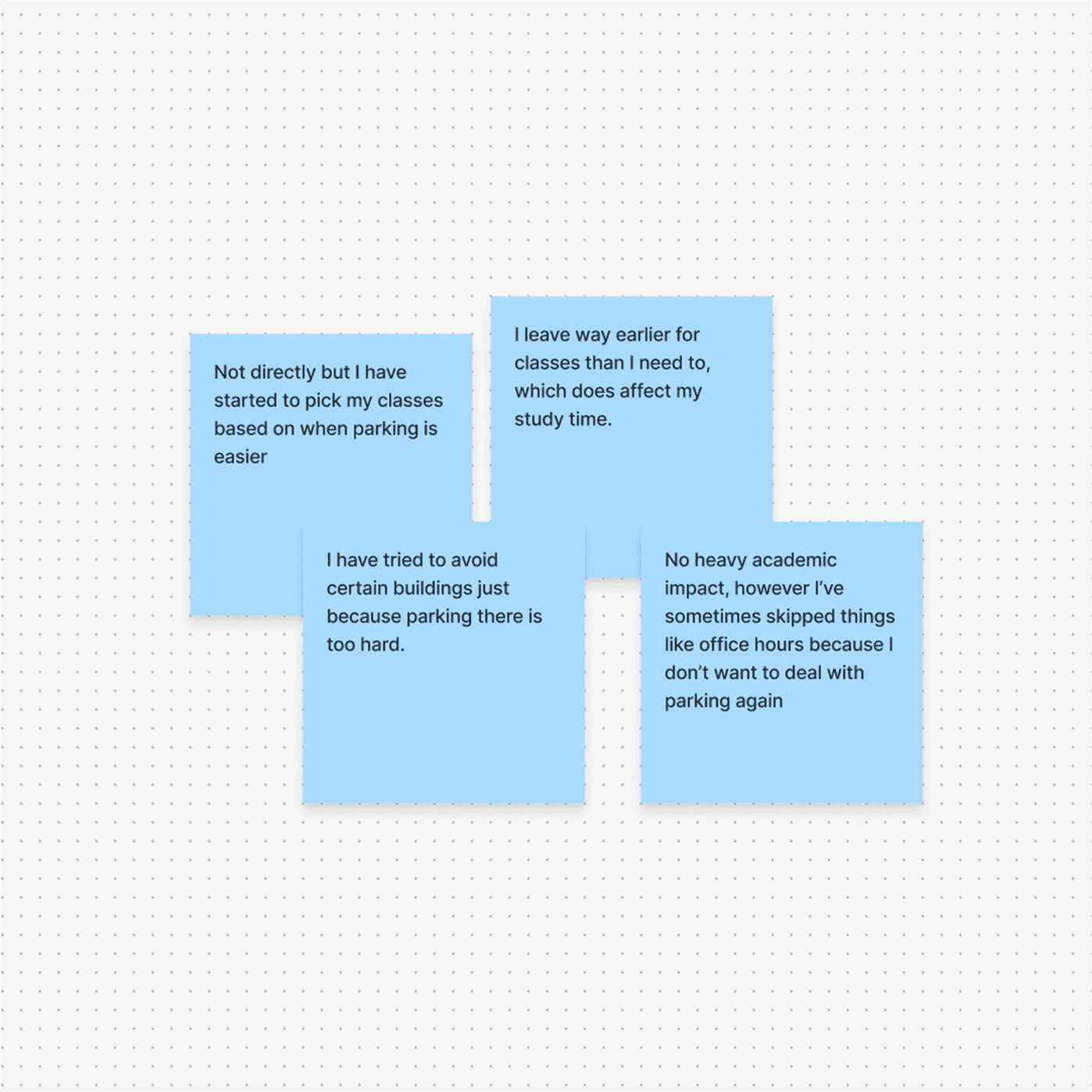
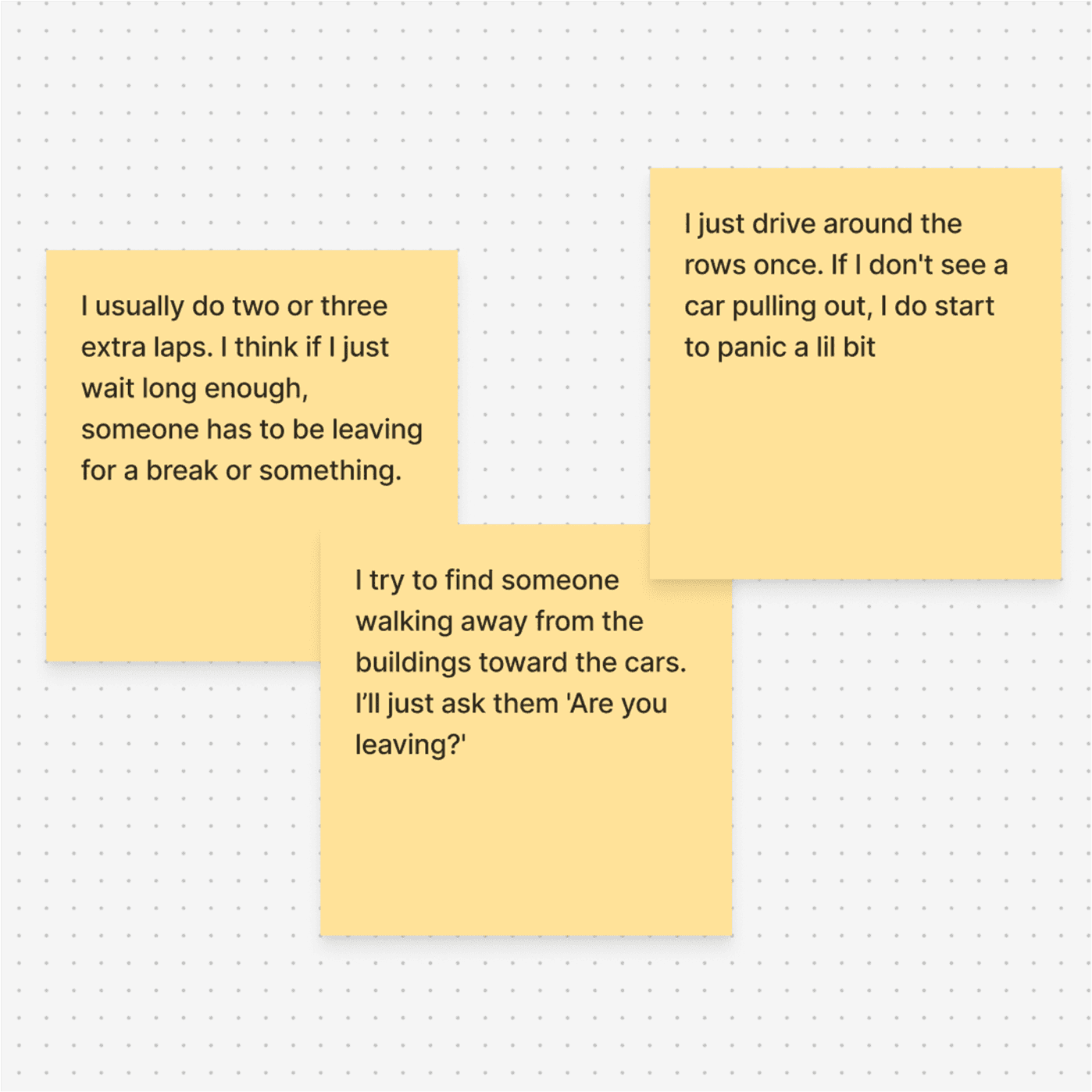
The search for parking can be a clear academic barrier, yet no existing system effectively addresses the resulting student anxiety. Since hardware based systems require massive capital investments and multi year planning, software-led intervention can be a strategic option. By leveraging the student community as a live data source, we can bypass infrastructure constraints entirely.
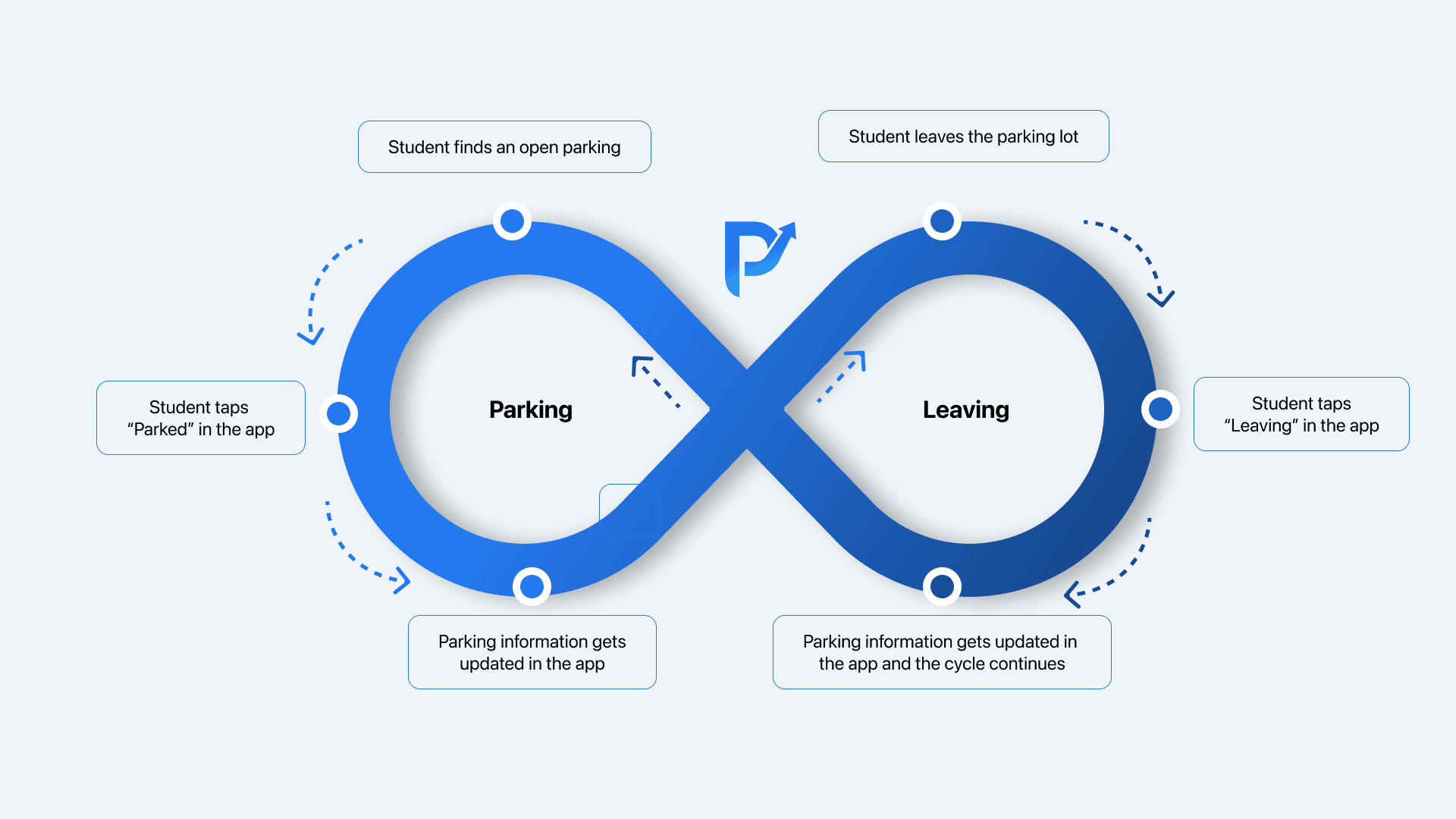
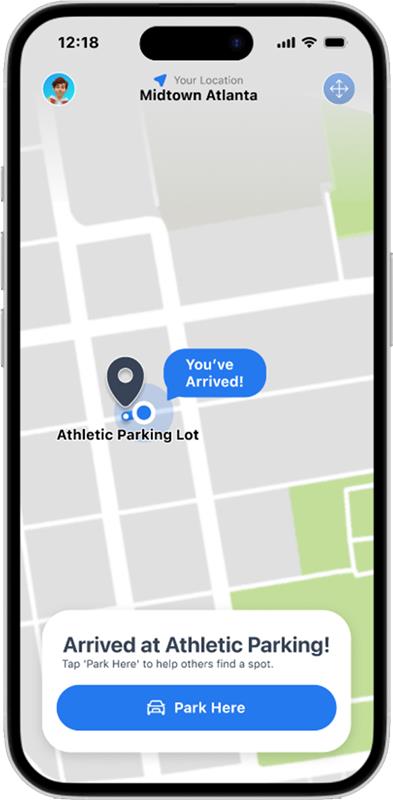
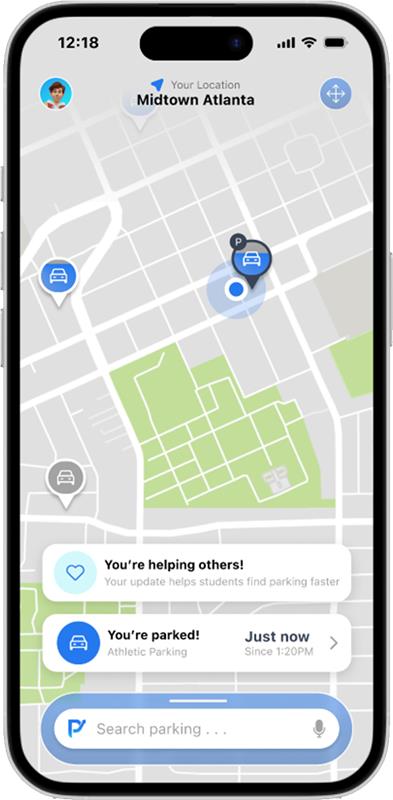
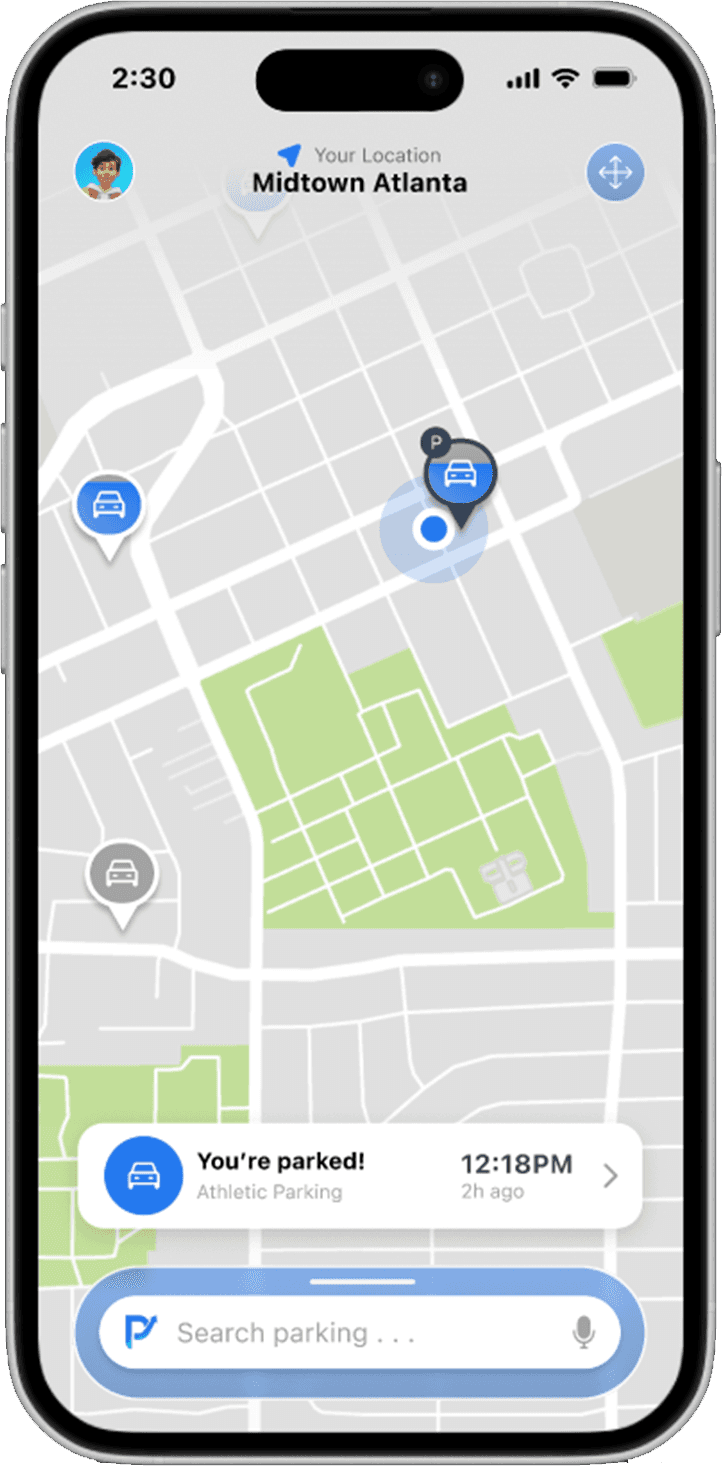
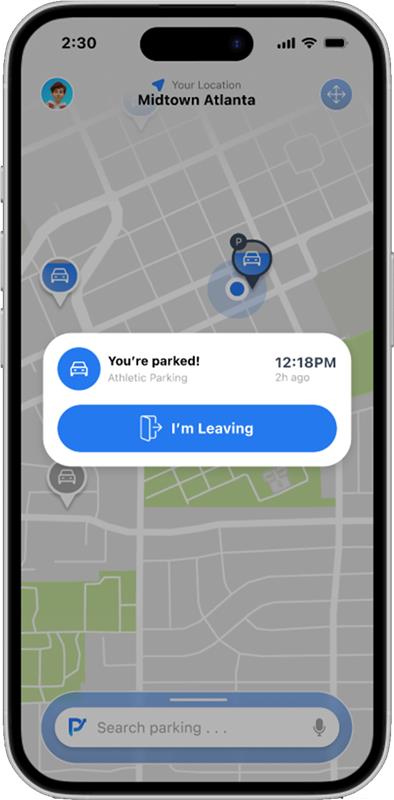
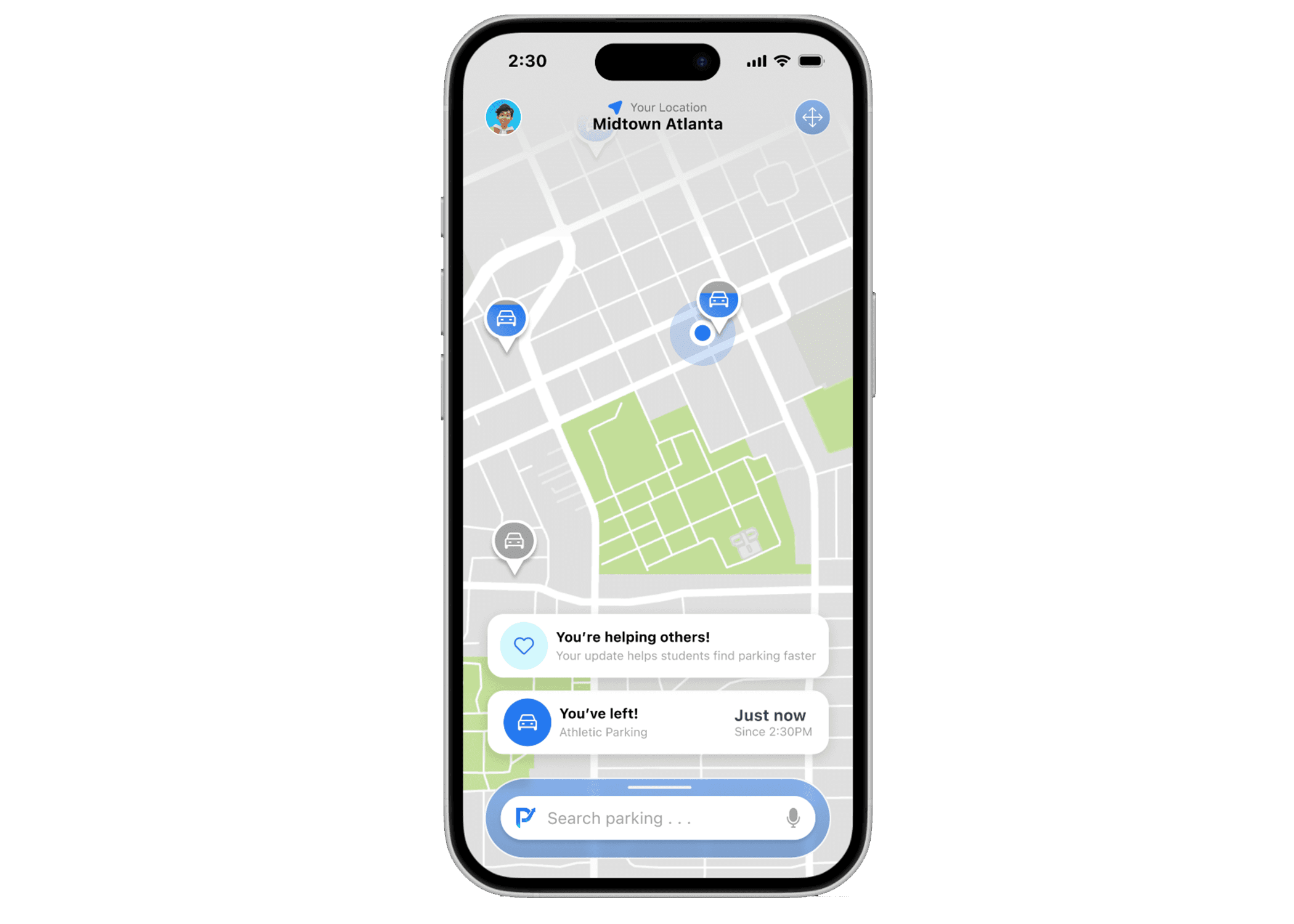
The ParkWise Loop: How a single tap from one student creates an immediate, low-cost navigation signal for the next.
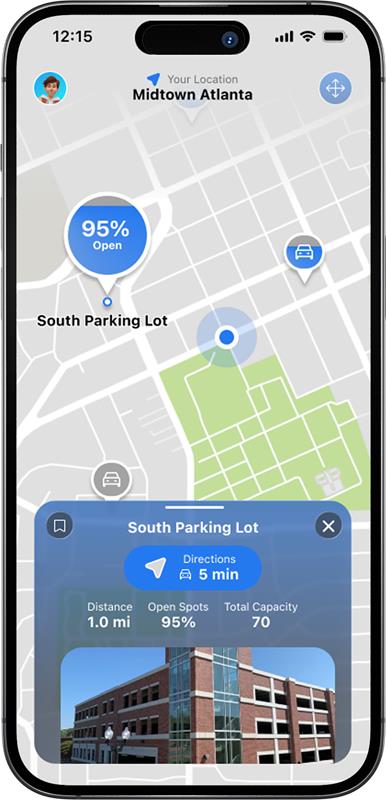
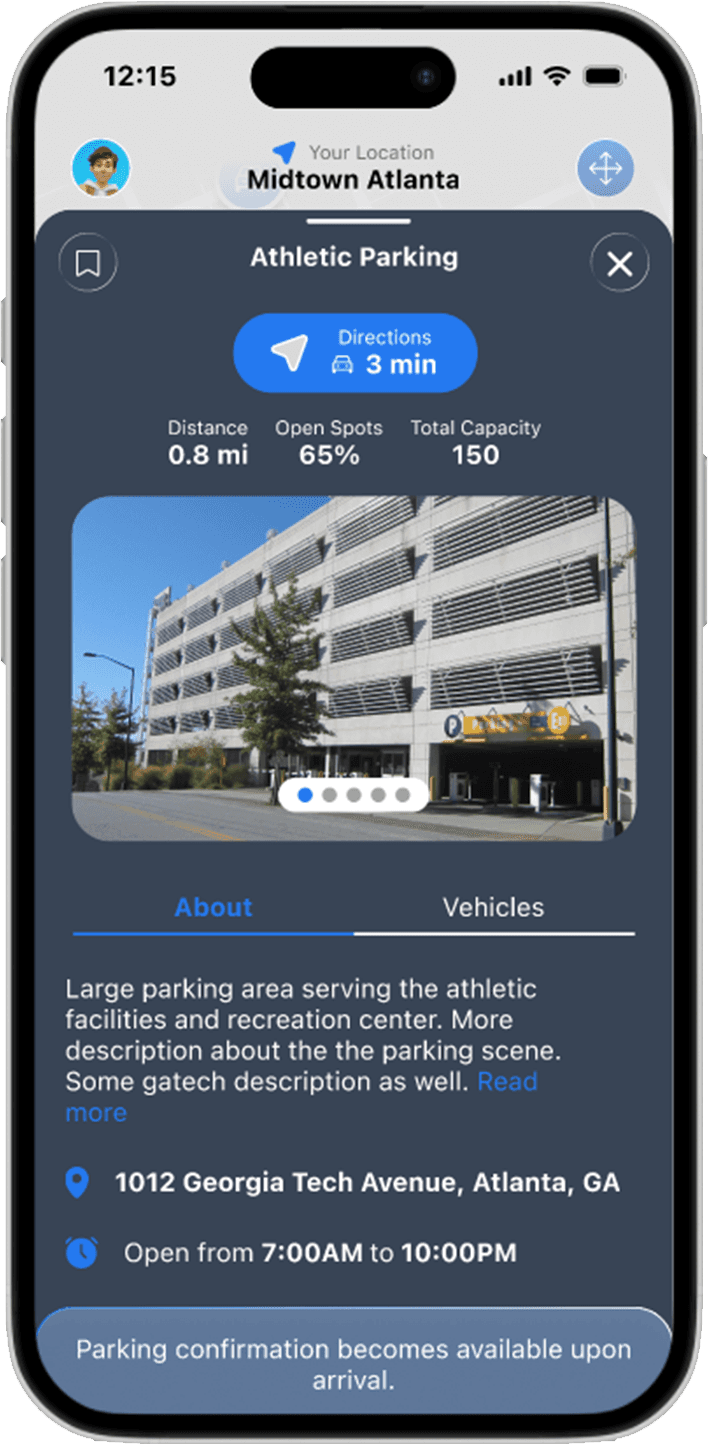
Parking is a secondary task. A student’s primary task is driving safely and arriving at class on time. I adopted a Zero-UI philosophy to ensure the app provides maximum value with minimum interaction. By leaning on automation and glanceable data, ParkWise functions as a silent co-pilot rather than a distraction.
The goal wasn't to create an app that students 'use,' but an ecosystem they 'participate in' through their existing movements.
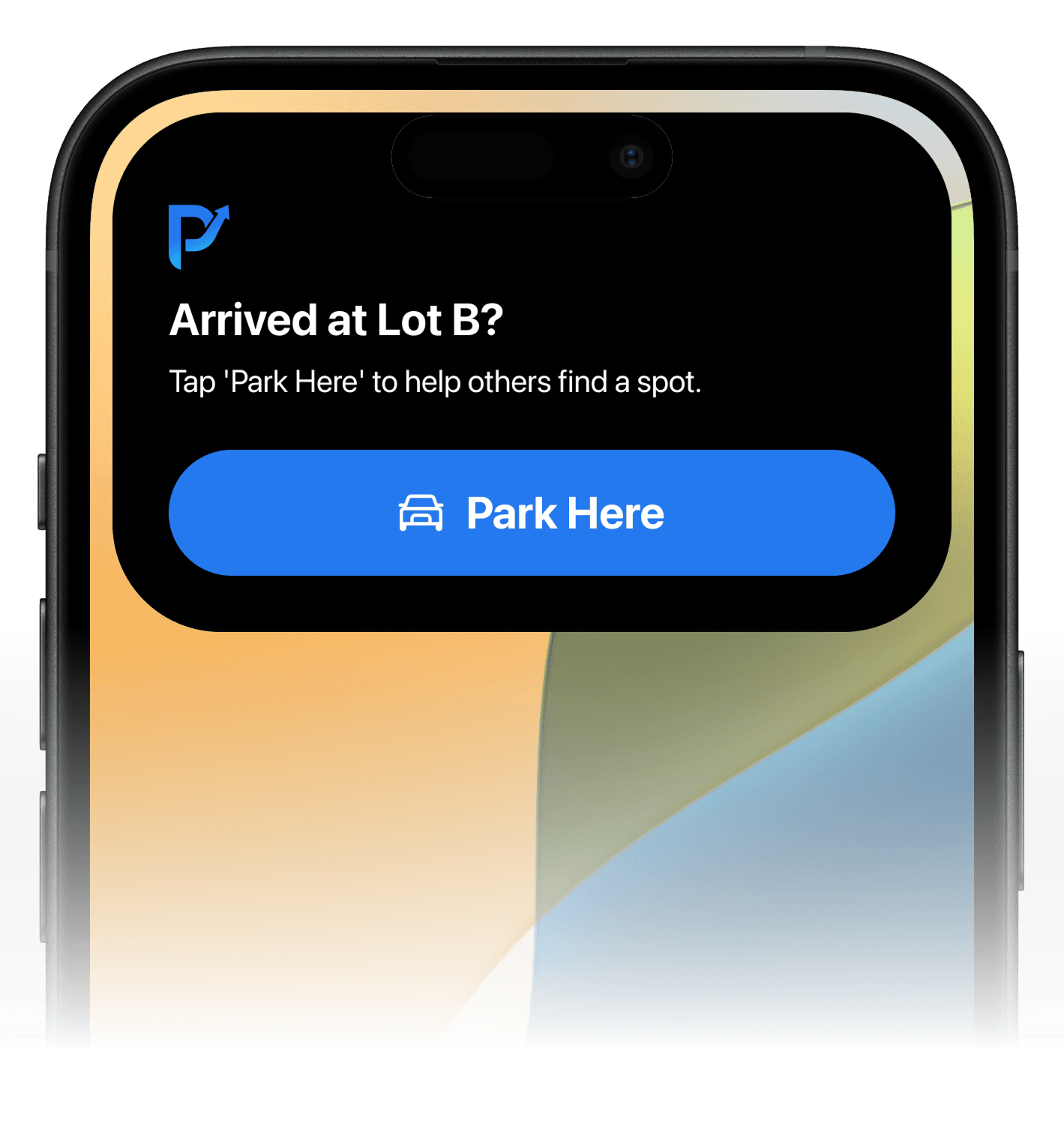
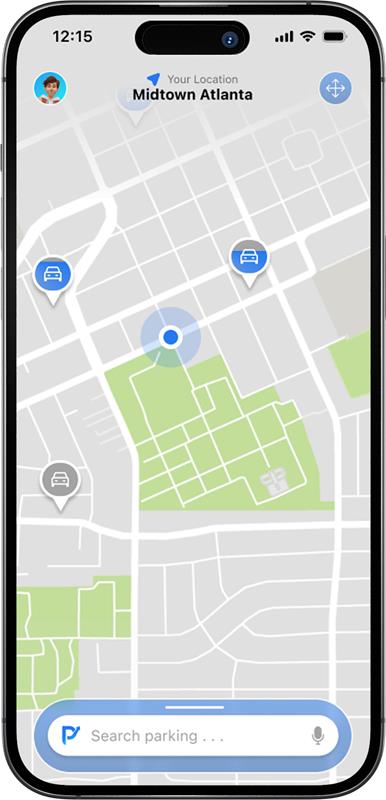
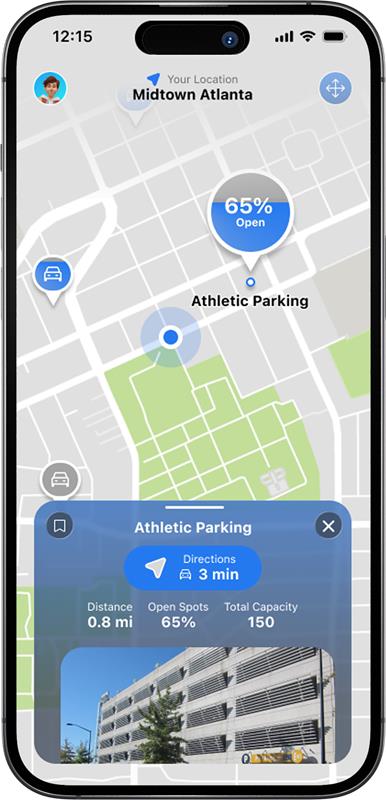
When a student is driving to a class, the last thing they need is a complicated app. I designed the interface to be "glanceable", such that students understand exactly where to go. Instead of cluttering the screen with tiny numbers or complex maps, I used bold colors and clear icons that show the "highest probability" spots at a distance. To keep the data live and accurate for everyone, I created a simple "One-Tap System." Without actually opening the app, a student can quickly mark when they’ve parked or left a spot through smart notifications. This tiny moment of participation is the "fuel" that keeps the community-led system running, ensuring the next student behind them has the certainty they need to get to class on time.
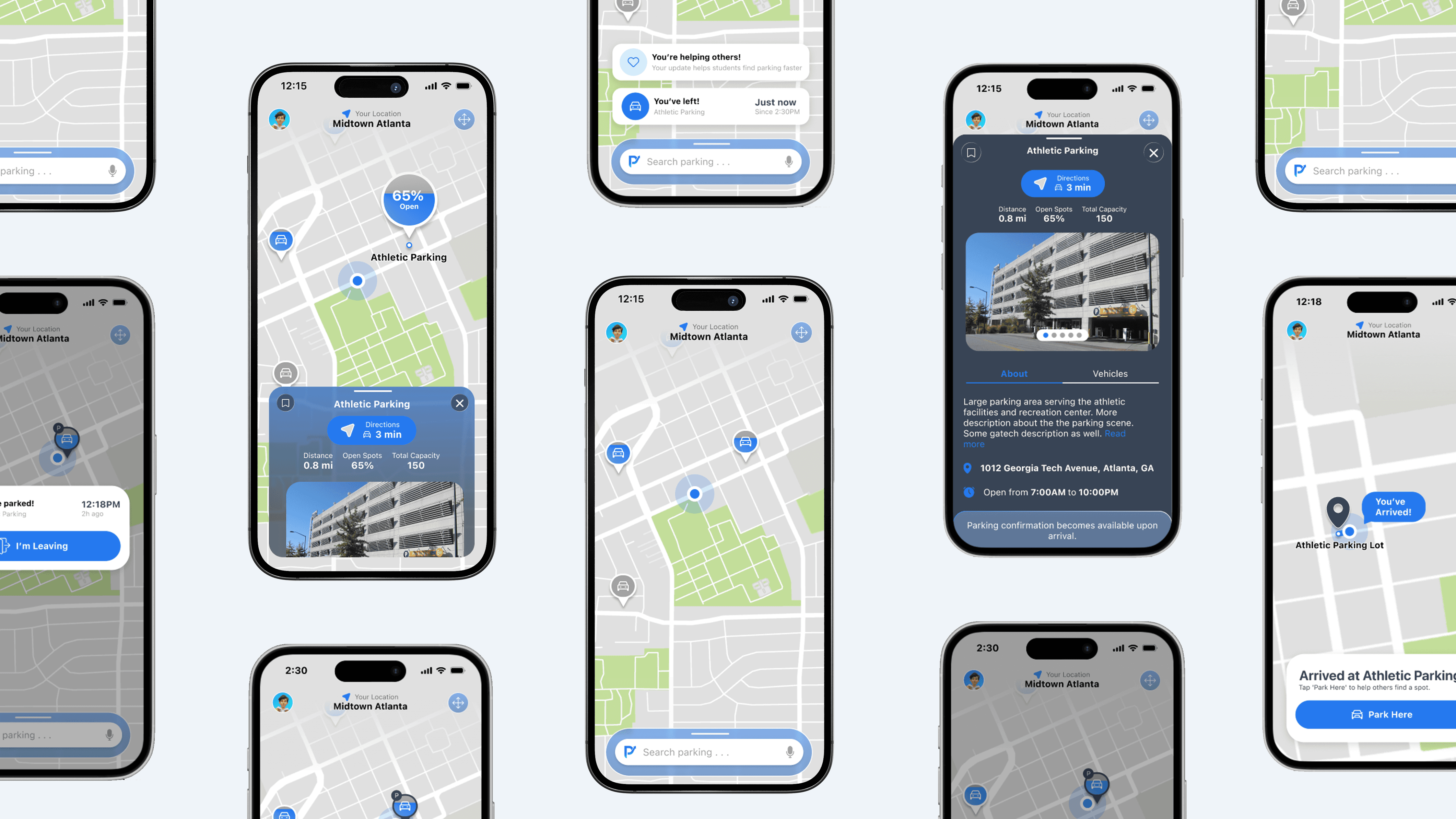
I designed and animated a 40-second promo video to visualize the Parkwise concept. The video is aimed at demonstrating how the app can be used to eliminate the frustration around parking on a busy campus. This motion graphic prioritizes clear visual cues and effectively communicates the app's utility.
Introduce Micro-Interactions for Gamification
To keep the data accurate, the app needs consistent student participation. My next step would be to design small, rewarding micro-interactions, such as "Streaks" for reporting or "Community Hero" badges. This can make the One-Tap Handshake feel less like a chore and more like a helpful contribution to the campus.
Pilot a "Predictive Arrivals" Feature
I want to move from showing what is happening now to predicting what can happen when the student actually wishes to arrive in the future. By analyzing historical community data, I would design a feature that tells a student leaving their house at 8:30 AM which lot is most likely to have space by 10:00 AM, moving the "Certainty" even further up the timeline.
Owning the End-to-End Vision
Completing this project from scratch-from the first sticky note to the final high-fidelity prototype—was a massive personal milestone. Even though this began as a Google UX Design Certificate project, I chose to treat it like a startup pitch rather than just an assignment. I had to act as my own researcher, strategist, and critic, ensuring that every design choice didn't just meet a rubric requirement, but actually solved a high-stakes problem for my peers.
Designing for Real-World Chaos
I quickly realized that a "pretty" app is useless if it’s distracting to someone driving. My biggest learning was how to design for high-stress moments. I constantly challenged my designs by asking: "Can a student understand this in a one-second glance while pulling into a crowded lot?" This pushed me to cut the fluff and prioritize safety and cognitive ease over "trendy" UI.
Solving Problems with People for People
This project taught me that you don’t always need a million-dollar sensor budget to fix a massive infrastructure headache. By looking at the student community itself as the "live data source," I learned how to design a social solution to a physical problem.
View other projects